SpaceX Rejects Three Space Force Contracts as PLD Space Nears Miura 5 Debut
The launch sector sees a shift in capital allocation as SpaceX turns down government work, PLD Space advances its rocket integration, and Reaction Dynamics seeks major funding.
By Ananya Gupta ·
SpaceX has declined three launch contracts offered by the United States Space Force, a decision that marks a notable shift in the company's approach to government procurement. The rejection, announced this week, signals that the company is prioritizing other strategic areas of its business over immediate military revenue. While the specific terms of the rejected contracts were not disclosed, the move underscores a continued divergence between the private sector's operational tempo and the government's scheduling requirements.
The decision comes amid a broader review of SpaceX's commercial pipeline. By saying no to the Space Force, the company retains the capacity to focus on its high-profile civil space initiatives. This includes the ongoing development of the Starship vehicle, which remains central to the company's long-term vision. The refusal of these specific military launches suggests that SpaceX is managing its launch manifest with a level of selectivity that reflects its current market dominance and internal resource constraints.
On the civil side of the ledger, safety considerations continue to shape the economics of deep space exploration. A NASA safety panel recently indicated that Starship may require up to 22 in-orbit refueling events to support a lunar landing mission. This technical requirement has significant implications for mission architecture and cost structure. Each additional refueling maneuver represents a complex logistical operation that must be accounted for in both engineering schedules and financial projections for lunar cargo and crew transport.
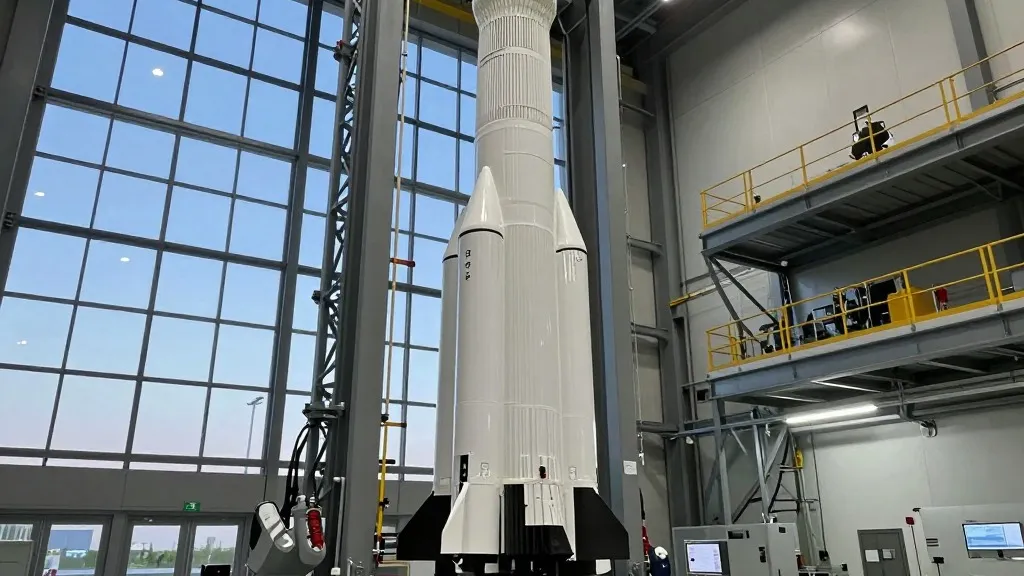
While the U.S. market grapples with these large-scale projects, European small-lift capabilities are approaching a critical milestone. PLD Space, a Spanish rocket manufacturer, reported that its Miura 5 vehicle is nearing final integration. The company stated that the rocket, which is slated for its inaugural flight, is in the final stages of assembly. This progress is a key indicator of the maturation of the European small-lift market, offering customers an alternative to U.S.-based providers.
PLD Space has already manufactured three Miura 5 rockets, according to CEO Raúl Torres. Two of these vehicles are dedicated to qualifying key system elements, while the third is the flight-ready unit. Torres explained on October 19 that the manufacturing process for these three vehicles allowed their teams to work continuously across different production stages. This continuous workflow enabled the application of lessons learned from each qualification campaign directly to the launch vehicle, a strategy aimed at reducing development risk and timeline slippage.
The current status of the flight vehicle involves rigorous testing of its upper stages. One Miura 5 second stage is now fully integrated, marking the start of system-level testing under representative operating conditions. This stage is currently located at PLD’s test facility in Teruel, where it is undergoing a qualification campaign. The tests include a wet dress rehearsal and a static hot-fire test, which are essential steps to verify the structural integrity and performance of the propulsion systems before the vehicle is cleared for flight.
The company has set a target for the first flight of the Miura 5 to occur before mid-2027. This timeline reflects a compressed schedule typical of modern rocket development, where rapid iteration is favored over lengthy, phased development cycles. The success of the Miura 5 will be a significant benchmark for PLD Space, demonstrating its ability to deliver a reliable small-lift solution to the global market.
Meanwhile, in Canada, the startup landscape is seeing significant capital movement. Reaction Dynamics, one of three prominent Canadian launch startups, is seeking to raise $350 million. The company stated that this funding will be used to expand its workforce from 68 to more than 350 employees. This headcount growth is directly tied to the accelerated development of its small-lift Aurora rocket, which the company hopes will reach orbit in 2028.
Reaction Dynamics is also looking beyond the small-lift segment. The company announced plans to develop a medium-lift rocket named Borealis, with a debut targeted for 2031. This dual-track approach allows the company to address immediate market needs with Aurora while positioning itself for larger, more lucrative contracts with Borealis. The $350 million raise, if successful, would provide the financial runway necessary to support both development programs simultaneously.
The convergence of these developments highlights the competitive dynamics in the global launch market. SpaceX's selective approach to government contracts, PLD Space's imminent entry into the small-lift market, and Reaction Dynamics' aggressive expansion illustrate a sector that is rapidly evolving. As companies refine their products and secure funding, the pressure on established players to maintain cost advantages and schedule reliability continues to intensify.
Source: Ars Technica